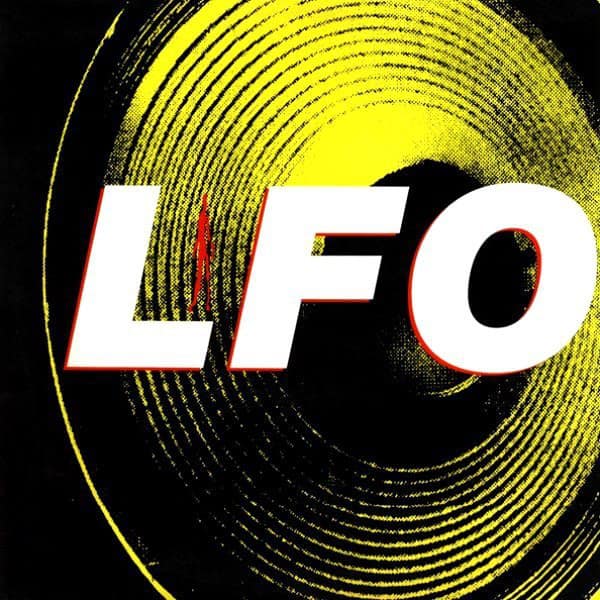
The Night LFO Put the Boy’s Sound System to the Test. Released in 1991, this promotional 12-inch brought together two defining tracks by British electronic duo LFO. Formed by Mark Bell and Gez Varley, LFO helped shape the bass-heavy “bleep techno” sound that emerged from northern England at the beginning of the 1990s
How I Discovered This Record
I received a promotional copy of this record in 1991. Tommy Boy releases were then promoted in France through Fnac Music Dance Division. At the time, I was the resident DJ at the Boy club in Limoges. I loved the record from the very first listen and played it the following night. The audience’s response was extraordinary: people started screaming as those low frequencies moved through the room. Part of our Turbosound system failed during the set and later had to be repaired. I still remember the technician’s expression when he came to inspect the damage: “What the hell did you play to blow this thing?”
Whether the record alone was responsible is impossible to establish, but the incident said something about the physical power of LFO’s music. This was not simply bass you could hear, it was bass you could feel throughout your body. Twenty-three years later, I had the chance to see Mark Bell perform alone as LFO at the Astropolis festival in 2014. Less than three months later, he died following complications after surgery. I am grateful that I was able to experience his music live one last time.
A Few Words About the Record
We Are Back is the most direct and confrontational of the two tracks. Its clipped vocal refrain, rigid machine rhythm and electronic bursts create a mixture of exhilaration and menace. It sounds playful, but also uncompromising: rave music reduced to a rhythm, a voice and a command. Originally released in 1990, LFO is even more radical. Its sparse construction leaves plenty of space around the dry percussion, sharp bleeps and exceptionally deep sub-bass. Instead of filling the entire frequency spectrum, Mark Bell and Gez Varley made the lowest frequencies the central element of the track.
On a suitable club system, the bass exists somewhere between sound and physical pressure. That sensation was fundamental to the emerging bleep techno scene: stripped-down electronic music built for large speakers, dark rooms and bodies in motion. “LFO” became Warp Records’ first major hit, reaching number 12 on the UK Singles Chart. More than three decades later, its production remains remarkably stark and powerful. It is not merely a record that captured the energy of the early British rave scene, it helped define its sound.
About LFO
LFO was formed in Leeds in 1988 by Mark Bell and Gez Varley. The duo took its name from the low-frequency oscillator, a synthesizer component used to modulate parameters such as pitch, volume or filter frequency. Their early releases, including LFO, We Are Back, Freeze and Love Is the Message, established them as pioneers of British bleep techno. Their debut album, Frequencies, was released by Warp Records in 1991 and became one of the label’s defining early records. LFO returned with Advance in 1996. Gez Varley subsequently left the group and continued his solo career, while Mark Bell carried on using the LFO name. Bell also became a major producer and collaborator, coproducing much of Björk’s Homogenic and working with Depeche Mode on Exciter.
In 2003, Mark Bell revived LFO with a third album, Sheath. He continued to perform under the name until his death in October 2014. LFO’s legacy can still be heard in techno, bass music and experimental electronic production. But the duo’s importance is perhaps best understood by returning to “LFO” itself: a deceptively simple track whose frequencies could transform a dance floor, and, on one memorable night in Limoges, put a sound system to the test.
Soutenir le magazine
Depuis 2005, Houz-Motik porte un regard indépendant sur la musique, les arts et les cultures contemporaines.
Tous nos contenus sont accessibles gratuitement. Si vous appréciez ce que nous faisons, vous pouvez nous aider à poursuivre cette aventure.



